

Most business owners assume paying super a few days late is just… late. The money gets there, everyone moves on.
That’s not how the ATO sees it.
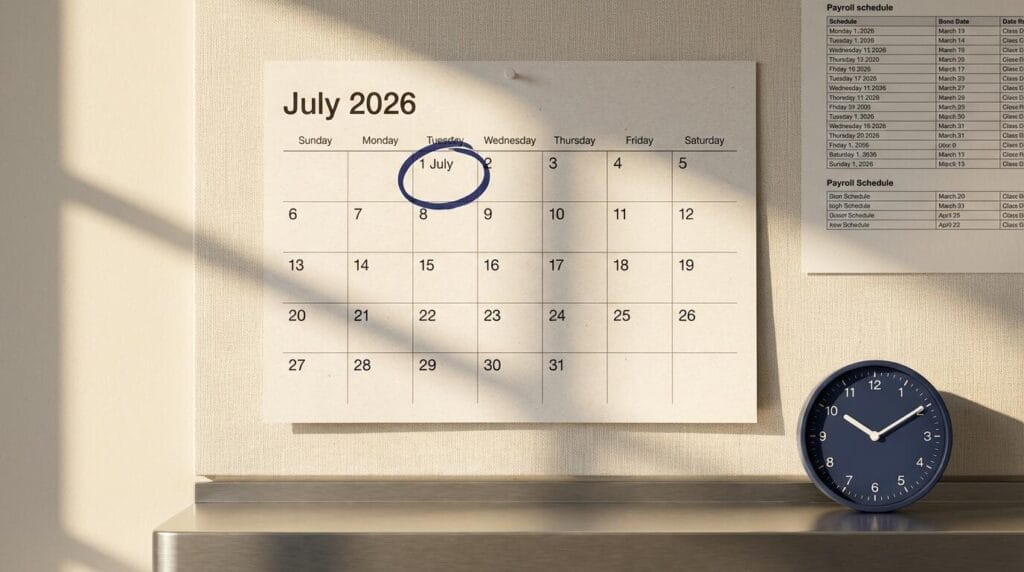
A late super payment triggers the super guarantee charge – a separate liability that’s non-deductible, accrues interest, and from 1 July 2026, kicks in not quarterly but every single pay run. Miss the window once under the new system and you’re not dealing with a quarterly problem. You’re dealing with a recurring one.
Your 3 Actions Before 1 July 2026
- Check your clearing house processing time. The 7-business-day clock ends when money reaches the fund, not when you send it. Most clearing houses take 2–3 business days. That’s not much buffer.
- Get off the SBSCH. The ATO’s Small Business Superannuation Clearing House closes permanently on 30 June 2026. If you’re still on it, you need a replacement before then — not after.
- Check your payroll software super settings. In Xero Payroll, super doesn’t submit automatically — it needs to be approved and processed. Confirm when in your pay cycle that happens.
What Is the SGC, and Why Isn’t It Just a Late Fee?
The super guarantee charge isn’t a fine tacked onto the super you owe. It’s a separate calculated liability, and unlike your normal super contribution, it’s not tax-deductible.
That’s the part people often miss. A regular super contribution reduces your taxable income. The SGC does not. So if you pay super late and the ATO assesses you, you’re paying more total tax than if you’d just paid on time.
The SGC is non-deductible. That alone changes the maths.
Under the current quarterly system, which applies to all earnings up to 30 June 2026, the charge has three components:
| Component | What it is |
|---|---|
| SG shortfall | The unpaid super, calculated on salary and wages – a broader base than OTE, and one that includes overtime |
| Nominal interest | 10% per annum on the shortfall |
| Admin fee | $20 per employee, per quarter |
From 1 July 2026, the structure changes:
| Component | What it is |
|---|---|
| SG shortfall | Unpaid super for that specific payday |
| Notional earnings | Daily interest from payday until the payment is received or assessed |
| Administrative uplift | Up to 60% of shortfall plus notional earnings |
| Penalties | 25% for first offence; 50% for repeat; up to 200% maximum |
The administrative uplift is new. It doesn’t exist under the quarterly system. Penalties are on top of the SGC, not instead of it.
What You’re Losing on 1 July 2026
Under the current system, if super arrives late, you have a safety net: the late payment offset. Lodge an SGC statement, elect to offset your late fund payment against the liability, and you avoid paying the same super twice.
That’s gone. The last quarter where the late payment offset applies is 31 March 2026, with super due 28 April 2026. For the June 2026 quarter, employers who miss the deadline face paying super twice, once to the employee’s fund and again as a non-deductible SGC liability to the ATO.
There’s a partial protection that survives the transition. Under the new rules, late super paid before the ATO issues an assessment will reduce the final shortfall amount automatically, as part of the SGC calculation. So if you catch a missed payment quickly and pay before the ATO gets involved, the base the charge is calculated on shrinks. But paying late contributions prior to an ATO assessment won’t reduce the SG charge itself, notional earnings and the uplift still apply.
Marcus runs a plumbing business in Western Sydney. Eight employees, fortnightly payroll, average quarterly super bill around $9,200. Under the old system, a missed January payment caught at March quarter end was annoying but manageable. The late payment offset kept his exposure reasonable. From July, each of those 26 annual pay runs creates its own 7-business-day window. Miss one for all eight employees and the SGC isn’t a rounding error. It’s notional earnings accruing daily, an uplift of up to 60% on the shortfall, and penalties of at least 25% of the total charge if the ATO gets there first.
Not sure if your current setup can meet the 7-business-day window? We can review your clearing house timing and flag any gaps before July. Get in touch.
The ATO’s Year-One Approach – Useful, But Not a Safety Net
PCG 2026/1 confirms the ATO will take a facilitative approach for the first year of payday super, from 1 July 2026 to 30 June 2027, for employers demonstrating genuine efforts to comply.
Three risk zones:
Low risk: paying on time, acting transparently, fixing errors quickly. The ATO won’t direct compliance resources at you.
Medium risk: genuinely attempting to transition but falling short on timing. Some exposure, but limited enforcement in year one.
High risk: employees with uncorrected shortfalls and no genuine attempt to comply. Active enforcement.
The ATO has been direct: it won’t apply compliance resources to employers who pay super on payday and fix errors quickly. That’s a reasonable position for a genuinely new system.
Two things to be clear-eyed about, though. The PCG doesn’t alter the law. From 1 July 2027, the Guideline no longer applies. Year-one goodwill doesn’t carry forward. And if the ATO audits you for an unrelated reason and finds late super along the way, the PCG risk tier doesn’t protect you from the charge. It only affects whether the ATO will actively hunt for it.
The PCG buys you goodwill in year one. It’s not legal protection.
The practical implication: build the right habits now. A clearing house with 3-business-day processing means initiating payment on payday, not the morning after. Variable pay, commissions, and contractor arrangements need checking too. The qualifying earnings base under payday super has specific rules, and payroll software doesn’t always handle edge cases without configuration.
Where to Go From Here
If you’ve worked through our Payday Super Preparation Checklist and the Payday Super Cash Flow Calculator, you’ve got the “what’s changing” side covered. This post is the other side of that equation: what happens when the timing slips.
From 1 July, that slip is more expensive than it’s been. Non-deductible charge, daily-accruing notional earnings, an administrative uplift that doesn’t exist under the current system. The incentive to get the mechanics right before July, not after hasn’t been stronger.
If you want someone to check that your payroll and bookkeeping setup is actually ready for the 7-business-day window, that’s the kind of thing we do as part of ongoing bookkeeping support. Better to find the gap in June than in August.
This article provides general information only and does not constitute financial, legal, or tax advice. The information is current as at June 2026. For advice specific to your circumstances, please consult a qualified professional.